Planning, permits & hiring
Flat roof types explained: what's on your roof and what it costs
- Mod bit
- Built-up
- Rolled
- TPO
- PVC
- EPDM
- Spray foam
- Metal
- Common flat and low-slope roof systems
- 8
- Per sq ft installed, mainstream membranes
- $5–$14
- Typical membrane service life
- 10–30 yrs
- Minimum slope for rolled roofing (model code)
- 1:12
Why does it matter which flat roof you have?
Because almost every decision downstream depends on it. A patch that works on modified bitumen can fail on TPO. A coating that bonds to granulated cap sheet may peel off EPDM without a primer. Some roofers specialize in torch-down asphalt systems and rarely weld single-ply. And when you compare quotes, you need to know whether two contractors are even proposing the same system.
The good news is that most residential flat roofs fall into one of eight families, and a few minutes on a ladder (with the safety precautions in our maintenance checklist) is usually enough to narrow it down.
How do you identify a flat roof system?
Look at three things: the color and texture of the surface, how the seams are made, and what the roof edge looks like in cross-section.
| System | Surface you’ll see | How seams look | Where it’s common |
|---|---|---|---|
| Modified bitumen (mod bit) | Granules like shingle grit, or smooth black/silver | Overlapped rolls about 1 m (39–40 in) wide, often with a bead of melted asphalt at the lap | Homes, porches, additions |
| Built-up roof (BUR) | Gravel embedded in asphalt, or a cap sheet or coating | No visible seams on top; several layers thick at the edge | Older homes, commercial buildings |
| Rolled roofing | Granulated, like shingle material in sheets | 36-in-wide rolls with nailed, cemented laps | Sheds, garages, porches with some slope |
| TPO | Smooth white, gray or tan sheet with a slight sheen | Heat-welded laps, flat and fused | Newer residential and commercial |
| PVC | Looks much like TPO, often more flexible | Heat-welded laps | Commercial, some residential |
| EPDM | Matte black (sometimes white) rubber | Taped or glued laps | Homes and commercial buildings |
| Spray foam (SPF) | Seamless, textured like orange peel, coated | No seams | Commercial and some homes |
| Low-slope metal | Metal panels with raised ribs | Standing seams or fastened laps | Porches, commercial, modern homes |
What are the asphalt-based flat roofs?
Modified bitumen is asphalt blended with rubber-like (SBS) or plastic (APP) modifiers and reinforced with polyester or fiberglass. It comes in rolls about a meter wide, as the manufacturer data sheets for common cap sheets show, and is installed by torch, hot asphalt, cold adhesive or a self-adhering backing. Most residential systems are two plies: a base sheet and a granulated cap sheet. It tolerates foot traffic well and is easy for most roofers to repair.
Built-up roofing is the original “tar and gravel” roof: alternating layers of roofing felt and hot asphalt (or, on older buildings, coal tar), finished with gravel, a cap sheet or a coating. It is thick and durable, but heavy, and leaks can travel between plies before showing up inside.
Rolled roofing (mineral-surfaced roll roofing) is a single layer of asphalt-saturated mat with granules, sold in 36-inch rolls. It is the cheapest option and the shortest-lived. The model residential code limits it to slopes of at least 1:12, so it belongs on sheds and gently sloped porches, not on a dead-flat roof that holds water.
What are the single-ply membranes?
TPO (thermoplastic polyolefin) is a white or light-colored sheet whose seams are fused with hot air. It is typically sold in 45, 60 and 80 mil thicknesses and is mechanically fastened, adhered or ballasted. The reflective surface helps with cooling loads in hot climates.
PVC is also heat-welded and looks similar. It is generally the more expensive of the two and is often specified where grease or chemicals reach the roof, such as near restaurant exhaust fans.
EPDM is a synthetic rubber, usually black, with seams joined by tape or adhesive. It stays flexible and is simple to patch with compatible EPDM products, but black EPDM absorbs heat and the seams are its weak point as it ages.
If you can’t tell TPO from PVC, you’re in good company. Check the permit record or the original contract before buying patch material. The wrong product won’t weld or bond.
What about spray foam and low-slope metal?
Spray polyurethane foam (SPF) is sprayed on as a liquid that expands into a seamless, insulating layer, then covered with a protective coating. HomeGuide puts foam’s insulating value at roughly R-6 per inch. Foam lasts a long time if the coating is renewed. HomeGuide cites recoating every 5 to 15 years depending on climate. Let the coating fail and UV breaks the foam down.
Low-slope metal usually means standing-seam panels with raised, interlocking ribs. Only systems designed and tested for low slopes belong on a nearly flat roof, so the panel type matters more than the metal.
How long does each flat roof last and what does it cost?
| System | Installed cost per sq ft | Typical service life | Watch for |
|---|---|---|---|
| Rolled roofing | $2.00–$5.50 | 5–10 years | Laps opening, granule loss |
| Modified bitumen | $5.00–$10.00 | 10–20 years | Blisters, open laps, flashing at walls |
| Built-up (BUR) | $5.50–$11.00 | 15–30 years | Bare spots in gravel, splits, blisters |
| EPDM | $5.50–$12.00 | 15–25 years | Seam tape lifting, shrinkage at edges |
| TPO | $6.00–$12.00 | 10–25 years | Seam failures, surface cracking with age |
| PVC | $7.00–$14.00 | 15–30 years | Shrinkage on older sheets, seam issues |
| Spray foam (SPF) | $4.00–$8.00 with top coat | Decades with recoats every 5–15 years | Worn coating, bird pecking, exposed foam |
| Low-slope metal | $5.00–$20.00+ | 30–50+ years | Fastener and seam leaks, corrosion near the coast |
Costs are installed prices for a residential roof, including tear-off of one existing layer, compiled from national cost guides (HomeGuide, Fixr, HomeAdvisor/Angi, This Old House, Forbes Home and RoofingCalc) and reviewed October 2026. Lifespans are the ranges those sources publish. Hot, sunny climates, ponding water and poor workmanship push results toward the low end. South Florida quotes tend to land in the upper half of each range, partly because of High-Velocity Hurricane Zone requirements in Miami-Dade and Broward. See flat roof replacement cost for size-based totals.
What if you still can’t tell what you have?
- Check the permit history. Most Florida counties and cities have an online permit search. A reroof permit usually names the system and lists its Florida Product Approval or Miami-Dade Notice of Acceptance (NOA) number, which identifies the exact product.
- Look at the edge. At a gutter or roof edge you can often see the layers: multiple plies suggest BUR, foam shows as a thick tan layer, and single-ply shows as one thin sheet over insulation or a cover board.
- Ask during an inspection. A roofer or inspector can identify the system and the number of layers, which matters because many codes limit how many roofs can be stacked before a full tear-off is required.
- Don’t cut a sample yourself. A hole in the field of the roof is a new leak. Let the roofer take a core and patch it properly.
Once you know your system, read what coating goes on my roof before you buy any product, and use our hiring guide to find a roofer who works on that system every day.
What we'd use for this job
Typical price ranges, not live prices. Check the label against your roof type before you buy.
Wet-or-dry roof cement · $20–$40
HenryHenry 208R Rubberized Wet Patch Roof Cement (HE208R042)
- Chemistry
- Asphalt
- Size
- 0.90 gal (1-gal can)
- Coverage
- About 12.5 sq ft per gallon at 1/8 in. thick
- Mod bit
- Built-up
- Rolled
- Metal
The emergency patch to keep in the garage: a rubberized asphalt cement that bonds to wet surfaces, even in the rain. Trowel it on thick and wide, and bed polyester fabric in it over anything bigger than a nail hole.
Read the fine print: Asphalt-based. Henry says to wait 30 days before coating over it, and it can bleed through white acrylic or silicone, so prime it with a bleed blocker or cut it out before a recoat. Not for EPDM rubber or PVC sheet roofs. Henry wants fabric on any hole wider than 1/4 in. or longer than 2 in.
Best for: Stopping an active leak on a mod-bit, built-up, rolled or metal roof
Check price on Amazon for Henry 208R Rubberized Wet Patch Roof Cement (HE208R042) (opens in new tab)Affiliate link — we may earn a commission at no extra cost to you. Coverage and specs are the manufacturer's stated figures. Disclosure
EPDM repair kit · $50–$110
QuestMarkQuestMark EPDM Roof Patch and Repair Kit
- Chemistry
- Other
- Size
- Kit
- EPDM
One box with what a proper peel-and-stick EPDM repair needs: wide flashing, cover strip, seam tape, T-joint covers, membrane cleaner and the hand tools. It's the right way to fix a rubber roof, not smearing tar on it.
Read the fine print: EPDM tape only holds on rubber that's been scrubbed free of chalk, and primed if the kit calls for it. Skip the prep and the patch peels. Never use asphalt cement on EPDM.
Best for: Punctures, open seams and small tears on EPDM rubber roofs
Check price on Amazon for QuestMark EPDM Roof Patch and Repair Kit (opens in new tab)Affiliate link — we may earn a commission at no extra cost to you. Coverage and specs are the manufacturer's stated figures. Disclosure
TPO repair tape · $40–$120
VariousTPO peel-and-stick cover strip / patch (white)
- Chemistry
- Other
- TPO
Small punctures and lifted lap edges on TPO can be covered with a TPO-specific pressure-sensitive patch over primed membrane. It's the DIY alternative to hot-air welding.
Read the fine print: Confirm the listing says TPO; EPDM tapes and RV kits are different products. Clean the membrane and use a TPO primer. A welded TPO patch is the permanent fix, and a roof under warranty should be repaired by a certified installer. PVC needs PVC-specific material.
Best for: Small punctures and lap edges on TPO roofs
Check price on Amazon for TPO peel-and-stick cover strip / patch (white) (opens in new tab)Affiliate link — we may earn a commission at no extra cost to you. Coverage and specs are the manufacturer's stated figures. Disclosure
Silicone roof coating · $230–$330
HenryHenry 887 Tropi-Cool 100% Silicone White Roof Coating
- Chemistry
- Silicone
- Size
- 4.75 gal
- Coverage
- About 320 sq ft per 4.75-gal pail at Henry's rate of 1.5 gal per 100 sq ft (22 dry mils minimum)
- Mod bit
- Built-up
- Rolled
- Metal
- Spray foam
- Silicone-coated
- Acrylic-coated
The silicone most homeowners can actually find on a store shelf: bright white, tolerates standing water better than acrylic, and rain-safe minutes after it goes on. Buy enough to hit the full thickness, because a thin silicone coat is money wasted.
Read the fine print: Once a roof is silicone, only silicone sticks to it later. No acrylic, asphalt cement or most tapes over it. Henry calls for a test area on asphalt roofs to check bleed-through and adhesion, and it's not for shingles. An opened pail starts curing from the humidity in the air, so don't plan on saving leftovers.
Best for: Recoating a sound mod-bit, built-up, metal or foam roof with long-lasting white silicone
Check price on Amazon for Henry 887 Tropi-Cool 100% Silicone White Roof Coating (opens in new tab)Affiliate link — we may earn a commission at no extra cost to you. Coverage and specs are the manufacturer's stated figures. Disclosure
Watch it done

Repairing a Damaged TPO Roof Membrane
Mule-Hide, a single-ply membrane maker, demonstrates repairing a damaged area in the open field of a TPO roof. Our notes on this video
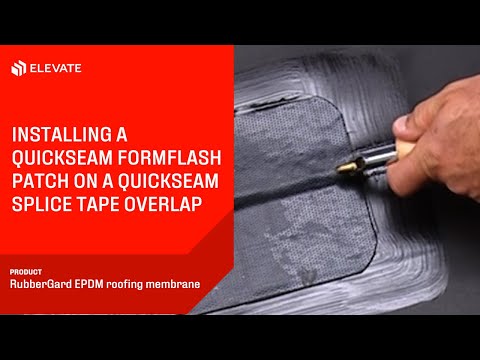
Patching an EPDM Seam with QuickSeam FormFlash
Elevate, the former Firestone Building Products, shows its QuickSeam FormFlash patch going over a splice-tape lap on a RubberGard EPDM roof. Our notes on this video
Frequently asked questions
Which flat roof systems are common on homes?
Modified bitumen, usually with a granulated cap sheet, is a very common choice for houses, porches and additions. Built-up roofs turn up on older homes and commercial buildings, and TPO, EPDM and spray foam on newer or commercial work. In Florida, your county's permit records usually name the system used on the last reroof.
How can I tell TPO from PVC?
Usually you can't by looking. Both are smooth, light-colored sheets with heat-welded seams. The reliable answers are the original contract, the permit file (which lists the product approval number) or a roofer cutting a small sample. It matters because the two weld differently and take different repair materials.
Can rolled roofing go on a completely flat roof?
It shouldn't. The model residential code that Florida's residential code is built on limits mineral-surfaced roll roofing to slopes of at least 1 inch per foot (1:12). On a dead-flat roof, water sits at the laps. Use a true low-slope membrane instead.
Which flat roof lasts the longest?
Low-slope metal and well-maintained spray foam have the longest potential lives, measured in decades, with foam needing a recoat every 5–15 years. Among membranes, PVC, EPDM and built-up roofs commonly reach 15–30 years. Heat, UV, ponding water and workmanship matter as much as the material.
Can any flat roof be coated?
Most can, but the coating has to match the surface. Silicone, acrylic and other chemistries bond differently to granulated mod bit, gravel-surfaced BUR, TPO, EPDM and metal, and some need a primer. See our guide to matching a coating to your roof before buying anything.